Trustworthy Edge Control Demands Determinism and Longevity
Summary: Edge controllers only earn lasting trust when runtime responsiveness and decades-long relevance are architected into the platform as a single continuous discipline.
Anyone specifying automation or edge controllers considers two time-based topics: will it operate fast enough, and will it still be worth using a decade from now? A recent Control Design September 2026 piece, titled Architecting Control System Determinism that Lasts, by Bruce Cloutier of INTEG Process Group, argues that those two questions are more connected than most engineers assume.
Defining determinism
Determinism is a measurement of responsiveness. Critical applications may need microsecond determinism, while slow-moving processes might accept minutes or hours. Many applications call for something in between, perhaps on the order of milliseconds or seconds for control and user-facing interfaces.
Modern edge controllers are tasked with doing far more than early digital systems ever were. They talk downward to sensors and motors, sideways to neighboring equipment, and upward to supervisory systems and the cloud, often juggling all three at once. They execute control logic, perform computations, negotiate secure connections, communicate data, serve up web pages, and more. Success isn’t measured by how fast any single task runs, but by how reliably the whole system behaves when everything happens simultaneously.
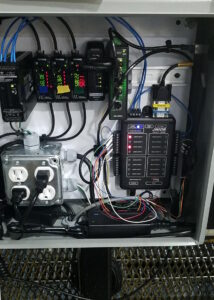
Longevity means adapting
Longevity is not the same as backward compatibility, although both attributes are important. Communication protocols evolve, security expectations tighten, and new data integration methods appear. A controller deployed for one job today is often still in service a decade later, and it has often picked up new and previously unanticipated burdens, such as transmitting industrial internet of things (IIoT) data to a higher-level host. A platform that can’t adapt eventually becomes the bottleneck it was supposed to prevent.
A controller stitched together from a stock operating system, a third-party networking stack, and a bolted-on web server may run fine at launch, but each piece ages independently and confidence must be re-earned with every update.
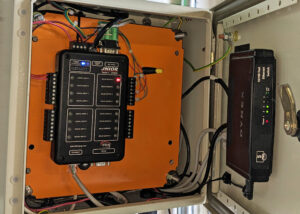
Speed and staying power are one discipline
INTEG’s flagship JNIOR platform was conceived over 20 years ago with networking, security, web server, registry, application environment, scheduler, and event models that were never independent or pre-existing products. These and other features were designed as an integrated system from the start. The company has followed this design philosophy for more than 20 years, adding new capabilities without disturbing what already works.
Determinism and longevity are built-in as two aspects of the same underlying trait, rather than as separate boxes to check.
Determinism cannot be bolted onto a platform after the fact, any more than longevity can. The stronger approach is a controller architecture complete with networking, security, web server, registry, application environment, scheduler, and event models … created as parts of the same operating system, developed and evolved together with full knowledge of the others.
A controller that behaves predictably on the bench but drops out of support within a few years becomes questionable in service. One that survives twenty years without ever earning real confidence has simply been tolerated, not trusted. Neither quality holds up much value on its own.
Don’t score speed and lifespan on separate checklists, but instead choose a platform delivering both, one that can end up quietly doing more down the road than originally anticipated.